Your well pump is the lifeline of your home’s water supply—until something goes wrong, it’s easy to forget it exists. But when issues strike, urgency follows. Water pressure might drop mid-shower, faucets may spit air, the pump could run non-stop, or you might turn the tap and find nothing happens.
Private wells are common in Connecticut, serving roughly 23% of its population. Well water is a daily reality for many households across the state.[1]
At Ray Page Plumbing, we know that pump issues are not just plumbing inconveniences. They affect your family’s drinking water, bathing, laundry, cooking, and day-to-day routine. Whether you need a repair, a full replacement, or just an honest diagnosis, it helps to understand how these systems work and what tends to go wrong in Connecticut homes.
Why well systems matter so much in Connecticut
Connecticut has a mix of municipal water service areas and homes that rely entirely on private wells. In many rural and semi-rural towns, a private well is simply part of homeownership. Connecticut DEEP notes that most wells in Connecticut are drilled into bedrock, largely because bedrock is the predominant geologic feature in the state and many homes are built on upland areas with thin glacial soils.[2] That is one reason well performance, pump depth, water yield, and water quality can vary from one property to the next.
Local geology plays a role in each well’s performance. In rural areas like Tolland or Litchfield County, deeper bedrock wells are typical, while other areas have different groundwater conditions. Connecticut also faces naturally occurring groundwater issues, such as arsenic, uranium, and radon, that have been flagged by state health authorities.[3]
What a well pump actually does
A well pump moves groundwater from your well into your home’s plumbing system. Most residential properties use either a submersible pump or, less commonly, a jet pump.
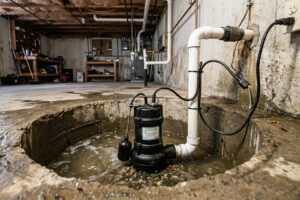
A submersible pump sits at the bottom of the well and pumps water up into the home. These are common for deeper wells and are often the preferred setup for modern residential systems. A jet pump is typically installed above ground and pulls water from a shallower source. The pump works with a pressure tank, pressure switch, and electrical controls to ensure your home has usable, consistent water pressure.[4]
If any part of that system starts failing, the symptoms can show up throughout the house.
Common signs your well pump may need repair
Many homeowners assume a well pump either works or does not. In reality, pump problems often start with smaller warning signs.
Low water pressure
A slow decline in water pressure is one of the most common clues that something is off. It could be the pump itself wearing down, but it could also be related to the pressure tank, a pressure switch, mineral buildup, or another part of the system. If showers are weaker than usual or sinks take longer to fill, it is worth getting checked before the issue gets worse.
Air sputtering from faucets
If your faucet spits bursts of air before water comes out, that can mean the system is drawing in air somewhere, the water level is dropping, or the pump is struggling to keep up with demand. Connecticut has published private-well guidance noting that some wells can have trouble during dry conditions, especially shallower wells.[5]
Dirty, cloudy, or sandy water
If the water suddenly looks cloudy or carries sediment, that does not always mean the pump is broken, but it may indicate the well system needs attention. Connecticut DPH notes that nuisance impurities such as iron and manganese can be present in private well water, and sediments or changes in water clarity are also reasons to investigate the system.[6]
Constant running or frequent cycling
A pump that seems to run all the time, or one that kicks on and off too often, is often a sign of trouble. That could mean a worn pressure tank, a failing switch, a leak, or a pump that is having trouble maintaining pressure. Left alone, that kind of short cycling can put more wear on the motor and shorten the life of the entire system.
No water at all
This is the issue no homeowner wants to face. A complete loss of water can occur due to pump failure, electrical issues, control problems, or well supply issues. At that point, a professional diagnosis is usually the quickest path to an answer.
What causes well pumps to fail?
Well pumps are durable, but they are not built to last forever. Most failures come down to a handful of issues.
Normal wear and age
Like any mechanical system, pumps wear out over time. Motors age. Bearings wear. Electrical components get less reliable. If your pump has been in service for many years and you are seeing repeated issues, replacement may make more sense than another repair.
Electrical or control problems
Sometimes the pump is not the real problem. It might be the pressure switch, control box, wiring, or another electrical component. That is why proper troubleshooting matters. Replacing a pump when the actual issue is a failed control can waste money.
Sediment and mineral buildup
Groundwater conditions affect pump performance. The EPA says private well owners are responsible for maintaining their well systems, and water quality issues can affect those systems over time. In Connecticut, iron, manganese, and other naturally occurring contaminants may be present depending on location, which can contribute to buildup or water quality complaints.[7]
Drought or low groundwater conditions
While Connecticut is not always thought of as a drought state, dry periods absolutely affect some wells. The state has published guidance for private well users, explaining that some wells run dry more easily than others and that shallow wells are generally more vulnerable during drought.[8]
Repair or replacement: how do you decide?
That is the question most homeowners really want answered.
In some cases, a repair is the obvious move. If the issue is a pressure switch, tank, wiring connection, or another isolated component, repairing the system can be the most cost-effective option. If the pump itself is still in decent shape and the rest of the system is sound, repair often makes sense.
In other cases, replacement is the better long-term decision. If the pump is older, if you have had multiple service calls, or if the motor is failing, putting more money into repairs may not be the smartest move. A replacement can restore reliability, improve performance, and reduce the chance of another no-water emergency.
A good plumber should tell you honestly which path makes more sense for your home rather than automatically pushing the larger job.
What does a well pump replacement involve?
Well pump replacement is not usually a simple swap, especially with deeper drilled wells common in Connecticut. The process may include pulling the existing pump, inspecting the drop pipe and wiring, checking the pressure tank and controls, and installing a properly sized replacement system.
It is also a good time to look at the overall condition of the system. If a homeowner has a failing pressure tank, outdated electrical controls, or recurring water quality complaints, those issues should be addressed along with the pump when appropriate.
Because private wells are not regulated like public water systems, homeowners are primarily responsible for system maintenance and water-quality monitoring. USGS notes that water from domestic wells is not routinely tested, and homeowners bear the majority of that responsibility.[9]
Connecticut-specific water quality considerations
One thing that makes well service in Connecticut a little different is that repair and replacement are not only about restoring water flow. They are also about protecting water quality.
The Connecticut Department of Public Health recommends testing private wells regularly and specifically says that whenever you notice a change in the taste, color, odor, or clarity of your water, you should contact your local health department or the state’s private well program for guidance.[10]
Connecticut also notes that private well owners should be aware of testing needs beyond the basic new-well potability tests. The state points to concerns such as bacteria, nuisance impurities, and naturally occurring contaminants, including arsenic, uranium, and radon.[11]
For homeowners, that means a pump problem and a water-quality concern can sometimes show up together. If your water suddenly looks different, tastes off, smells unusual, or carries sediment, it is worth investigating both the plumbing side and the water-testing side.
Why local experience matters
A plumber familiar with Connecticut homes adds value to well pump work. Factors like local geology, seasonal changes, winter, and health regulations influence recommendations. Assessing well depth, equipment age, and water quality specifics helps tailor the right solution.
That is one reason local service matters. You do not just want someone who can replace a part. You want someone who understands how private well systems behave in Connecticut and how to help you make a durable decision for your home.
When to call Ray Page Plumbing
If you are seeing low pressure, cloudy water, air in the lines, frequent cycling, or no water at all, it is a good time to get the system checked. Some issues can be repaired fairly quickly. Others point to a pump that is nearing the end of its service life. Either way, the sooner you diagnose the problem, the better your chance of avoiding a bigger disruption.
At Ray Page Plumbing, we help Connecticut homeowners with well pump repair, replacement, and system troubleshooting. We understand that when your well system is not working, you are not just dealing with a plumbing issue. You are dealing with your home’s water supply. Our goal is to provide practical, honest service that gets you back to reliable water as quickly as possible.
Frequently Asked Questions About Well Pump Repair & Replacement
How do I know if my well pump is failing?
Common warning signs include low water pressure, air sputtering from faucets, dirty or cloudy water, constant cycling, or a total loss of water. Connecticut DPH also advises homeowners to pay attention to changes in taste, color, odor, or clarity, since those can signal a private well issue.[10]
How long does a well pump usually last?
Lifespan varies by usage, water quality, pump type, and maintenance. There is no single state-issued number that fits every home, but like most mechanical systems, pumps wear down over time, and older pumps are more likely to need replacement than newer ones. A professional inspection is the best way to judge whether your current pump still has useful life left.
Is low water pressure always a pump problem?
No. Low pressure can also be caused by a pressure tank issue, a pressure switch problem, clogged components, leaks, or mineral buildup. That is why proper diagnosis matters before replacing equipment.
Are private wells common in Connecticut?
Yes. Connecticut DPH says private residential wells serve about 23% of the state’s population, or more than 837,000 people.[1]
Should Connecticut well owners test their water regularly?
Yes. Connecticut DPH provides testing recommendations for private well owners and urges you to respond promptly to changes in water appearance, odor, taste, or clarity.[10]
What contaminants are Connecticut well owners told to think about?
Connecticut specifically highlights issues such as bacteria, iron, manganese, and naturally occurring contaminants like arsenic, uranium, and radon in some areas.[3]
Can drought affect a private well in Connecticut?
Yes. The state has published guidance explaining that some private wells can struggle during drought conditions and that shallow wells are often more vulnerable.[8]
When is replacement better than repair?
Replacement is often the better choice when the pump is older, the motor is failing, or repairs are becoming frequent enough that they no longer make financial sense. A repair often makes more sense when the issue is limited to a switch, tank, wiring, or another isolated component.
Sources
- Connecticut Department of Public Health – Private Wells
https://portal.ct.gov/dph/environmental-health/private-well-water-program/private-wells - Connecticut Department of Energy & Environmental Protection – Connecticut’s Aquifers and Groundwater
https://portal.ct.gov/DEEP/Aquifer-Protection-and-Groundwater/Ground-Water/Connecticuts-Aquifers - Connecticut Department of Public Health – Private Well Testing Program
https://portal.ct.gov/dph/environmental-health/private-well-water-program/private-well-testing - U.S. Environmental Protection Agency – Learn About Private Drinking Water Wells
https://www.epa.gov/privatewells/learn-about-private-water-wells - Connecticut Department of Public Health – Guidance for Private Well Users (PDF)
https://portal.ct.gov/-/media/Departments-and-Agencies/DPH/dph/drinking_water/pdf/guidanceforprivatewelluserspdf.pdf - Connecticut Department of Public Health – Private Drinking Water in Connecticut (PDF)
https://portal.ct.gov/-/media/Departments-and-Agencies/DPH/dph/environmental_health/private_wells/Publications/01301724PWTestingpdf.pdf - U.S. Environmental Protection Agency – Private Drinking Water Wells
https://www.epa.gov/privatewells - Connecticut Water Planning Council – Drought Information and Reports
https://portal.ct.gov/water/drought/data-and-reports - U.S. Geological Survey – Domestic (Private) Supply Wells
https://www.usgs.gov/mission-areas/water-resources/science/domestic-private-supply-wells