If you’ve lived in Hartford County for more than one winter, you already know that Connecticut doesn’t ease into cold weather. One week you’re raking leaves in Ellington, and the next, an overnight cold snap has Vernon and Tolland waking up to frost on the windows and single-digit wind chills. Hartford’s average January low is around 21°F, but it doesn’t take an average night to cause damage — it takes a hard freeze on an unprotected pipe.
For homeowners in Vernon, Manchester, South Windsor, East Windsor, and the surrounding towns, plumbing that runs through an unheated basement, crawl space, or attached garage is especially vulnerable once temperatures drop into the teens and single digits. The good news is that most frozen-pipe emergencies are preventable with about an hour of prep work before winter sets in. This checklist walks through exactly what to do — and what warning signs mean it’s time to call a licensed plumber before a small problem becomes a flooded basement.
Why Connecticut Winters Are Especially Hard on Pipes
Water expands by roughly 9% as it freezes, and in a closed pipe that expansion has nowhere to go. Plumbing professionals and disaster-response organizations generally point to 20°F as the temperature where frozen-pipe risk becomes significant1,2 — a threshold Hartford County crosses several times most winters, and sometimes for multiple nights in a row during a January or February cold snap.
Connecticut’s aging housing stock compounds the risk. Many homes in Vernon, Tolland, and Manchester were built decades before modern insulation standards, which means supply lines often run through uninsulated crawl spaces, unheated basements, or exterior walls that offer pipes little protection from outdoor temperatures. Add in hard water and mineral buildup common throughout the region — which can make older galvanized and copper pipes more brittle over time — and it’s easy to see why a stretch of hard freezes hits older CT homes harder than newer construction.
The Real Cost of Waiting
Water damage and freezing are consistently one of the most frequent and expensive homeowners insurance claims in the country. Industry data compiled from Insurance Information Institute figures puts the average water damage and freezing claim at roughly $13,954 over a recent five-year period3. More recent data is even starker: one major insurer reported over 20,000 frozen-pipe and winter water damage claims between 2024 and mid-2025 alone, totaling more than $628 million in paid losses, with an average claim exceeding $30,0004.
To put the physical damage in perspective, the Insurance Institute for Business & Home Safety notes that a crack as small as one-eighth of an inch in a frozen pipe can release up to 250 gallons of water a day5. By comparison, the plumbing repair itself is often the cheapest part of the ordeal — it’s the water cleanup, drywall, flooring, and mold remediation that turn a burst pipe into a five-figure claim. A little prevention goes a long way.
Your Pre-Winter Plumbing Checklist
Work through this list before Hartford County’s first hard freeze, typically by mid-to-late November:
- Insulate exposed pipes. Wrap pipes in unheated basements, crawl spaces, attics, and garages with foam sleeves or heat tape, paying special attention to any pipe running along an exterior wall.
- Disconnect and drain garden hoses. Shut off the interior valve supplying outdoor spigots, then open the spigot to drain any remaining water and allow it to expand safely outside the pipe.
- Seal drafts near your foundation. Caulk gaps around sill plates, dryer vents, and any place pipes pass through an exterior wall — cold air infiltration is one of the most common causes of frozen pipes in older CT homes.
- Locate and test your main shutoff valve. Every household member should know where it is and how to use it. If a pipe freezes or bursts, shutting off the water quickly is the single most effective step you can take to limit damage.
- Service your water heater. A pre-winter flush and inspection can catch sediment buildup and failing components before your household depends on hot water during the coldest stretch of the year.
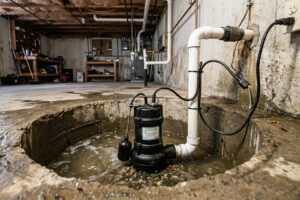
- Check your well pump and sump pump. Homes on well water or with a sump pump in the basement should confirm both are working properly before winter storms increase groundwater and runoff.
- Let vulnerable faucets drip on the coldest nights. When overnight temperatures fall into the teens or single digits, a slow, steady drip from faucets served by exposed pipes relieves pressure buildup and helps prevent a freeze.
- Keep the thermostat at 55°F or higher. This applies even — especially — if you’re traveling or the home will be unoccupied for a stretch of the winter.
- Schedule a pre-winter plumbing inspection. A licensed plumber can spot at-risk pipe runs, aging fittings, and other issues a homeowner might not catch during a routine walkthrough.
Warning Signs Your Pipes Are at Risk
Even with prevention steps in place, keep an eye out for these signs during a cold snap:
- Noticeably reduced water flow or a trickle from a faucet that normally runs freely
- Frost or visible ice on an accessible section of pipe
- Unusual banging, whistling, or gurgling sounds when water is running
- A persistent cold draft or noticeably cold section of wall or floor near known pipe runs
- A drain or trap that suddenly stops working, which can indicate a frozen trap
If a Pipe Freezes: What to Do (and What Not to Do)
If you catch a frozen pipe before it bursts, shut off the water supply to that section if possible, then open the nearest faucet to relieve pressure as the ice thaws. Gentle heat — a hair dryer, a warm towel, or an electric heating pad — can help thaw an accessible section slowly. Never use a blowtorch, propane heater, or other open flame near a pipe; trapped water can boil and cause the pipe to rupture, and open flames pose a serious fire and carbon monoxide risk.
If you can’t locate the frozen section, it’s inaccessible, or the pipe has already cracked or burst, shut off the main water valve and call a licensed plumber right away. The longer a leak runs behind a wall or under a floor, the more expensive the cleanup becomes.
Why Hartford County Homeowners Trust Ray Page Plumbing
Ray Page Plumbing is a locally owned, licensed, and insured plumbing contractor that has worked on the older homes, well systems, and hard water found throughout Hartford County. We know which neighborhoods tend to have pipes running through unheated crawl spaces, which towns rely heavily on well water, and what a New England winter does to plumbing that hasn’t been prepped. Our team can inspect your system, insulate vulnerable pipe runs, and service your water heater or well pump before the first hard freeze arrives — so you’re not calling us for an emergency at 2 a.m. in January.
Proudly Serving Hartford County
Ray Page Plumbing provides residential plumbing services throughout Vernon, Tolland, Manchester, Ellington, Rockville, South Windsor, and East Windsor, Connecticut. Whether you need a single pipe insulated or a full pre-winter plumbing inspection, our licensed team is ready to help.
Frequently Asked Questions
At what temperature do pipes actually freeze in Connecticut?
Water itself freezes at 32°F, but pipe insulation and the surrounding structure typically buy some protection. Most plumbing professionals consider 20°F outdoor temperatures the point at which frozen-pipe risk becomes significant2,5, and the risk increases the longer temperatures remain there.
Is it okay to just turn the heat off if I’m away for the winter?
No. Even an unoccupied home needs heat to protect its plumbing. Keep the thermostat at a minimum of 55°F, and consider shutting off the water supply and draining it entirely if the home will be vacant for an extended period.
How much does a pre-winter plumbing inspection cost?
Cost varies based on your home’s size, age, and the number of vulnerable pipe runs, but a pre-winter inspection is consistently far less expensive than repairing a burst pipe and the resulting water damage. Contact Ray Page Plumbing for a quote specific to your home.
Schedule Your Pre-Winter Plumbing Inspection
Don’t wait for the first hard freeze to find out which pipes in your home are at risk. Call Ray Page Plumbing today at (860) 926-4842 or schedule a pre-winter inspection today.
Sources
- American Red Cross, “Preventing & Thawing Frozen Pipes” — https://www.redcross.org/get-help/how-to-prepare-for-emergencies/types-of-emergencies/winter-storm/frozen-pipes.html
- Kentucky Farm Bureau, citing Insurance Institute for Business & Home Safety (IBHS), “Frozen Pipe Prevention 101” — https://www.kyfb.com/insurance/lifes-blueprints/frozen-pipe-prevention-101/
- Pro House Maintenance, citing Insurance Information Institute / Triple-I data, “19 Water Damage and Plumbing Statistics (2026)” — https://www.prohousemaintenance.com/guides/water-damage-statistics-2026/
- State Farm Newsroom, “Frozen Pipes? Not So Nice! Beat Winter Water Woes Before They Strike” — https://newsroom.statefarm.com/frozen-pipes-not-so-nice-beat-winter-water-woes-before-they-strike/
- Insurance Institute for Business & Home Safety (IBHS) data, as cited in Kentucky Farm Bureau, “Frozen Pipe Prevention 101” — https://www.kyfb.com/insurance/lifes-blueprints/frozen-pipe-prevention-101/
- WeatherAPI.com, Historical Climate Data for Hartford, CT (January averages) — https://www.weatherapi.com/history/january/q/hartford-2553258