A clogged drain is one of those problems that starts small and patient. Water drains a little slower than it did last month. You notice it, make a mental note, and move on. Then one morning you’re standing in two inches of water in the shower, or the kitchen sink has stopped draining entirely, and what was once a minor inconvenience has become a disruption to your whole day.
We’ve been handling clogged drains across Connecticut since 2007 — in ranch homes in Tolland County, older colonials in the Hartford area, multi-family buildings in New Britain, and everything in between. Drain cleaning is one of the most common calls we get, and homeowners who call early consistently save money compared to those who wait for a full backup. The one thing we see consistently is that clogged drains almost always give you warning before they fail.
This guide covers why clogged drains happen in Connecticut homes, how to read the signs before things get serious, what works when you’re dealing with a clog, and when it’s time to call a plumber instead of reaching for the plunger.
Clogged Drains in Connecticut: A Few Reasons They’re More Common Than You’d Think
Drain clogs happen in every home, but Connecticut has a few specific conditions that make them more frequent and sometimes more serious than homeowners expect.
The age of the housing stock is the most significant factor. Connecticut has one of the oldest median housing ages in the country. Many homes in the state — particularly in Hartford, New Haven, Tolland, and Windham counties — were built before 1960, and some have plumbing that has never been updated. Over decades, older cast iron drain pipes develop rough, corroded interior surfaces. New PVC pipe is smooth and lets debris pass through easily, while corroded cast iron catches and holds grease, hair, soap scum, and mineral deposits. What takes years to build up in a newer home can happen in months in an older one.
Connecticut’s climate is another factor that doesn’t get enough attention. Freeze-thaw cycles over many winters cause the ground to shift and settle, and that movement affects underground drain and sewer pipes. A pipe that was perfectly sloped for drainage when it was installed in 1952 may have developed low spots — called pipe bellies — where water and debris pool instead of flowing through. Bellied pipes produce slow drains and recurring clogs that no amount of snaking or chemical treatment will permanently fix. When we suspect a structural issue, a camera inspection through our sewer line repair service is the right next step.
Hard water also plays a role in parts of the state. The U.S. Geological Survey has documented that hard water — water with elevated levels of calcium and magnesium — contributes to mineral scale buildup inside pipes over time, narrowing their internal diameter and making other clogs more likely to take hold.[1] If you’re on a private well and noticing recurring scale issues, our free water test can tell you exactly what’s in your water.
What’s Actually Causing Your Clogged Drain
The fix for a clogged drain depends entirely on the cause. Not all clogs are the same, and not all of them respond to the same treatment. Here are the most common culprits we find in Connecticut homes:
Hair. This is the leading cause of bathroom drain clogs. Hair binds together inside the drain, catches soap residue and skin cells, and forms a dense mat that water can barely pass through. It’s worse in homes with multiple people sharing a bathroom, and it builds up faster than most people realize. A drain that was clear six months ago can be significantly restricted by hair alone.
Grease and cooking fat. Grease is the main culprit behind kitchen drain clogs. When hot, it’s liquid and flows freely. But it cools inside the pipe — sometimes just a few feet past the drain opening — and solidifies against the pipe walls. Each time more grease goes down, another layer builds. Over months, it narrows the pipe until eventually nothing gets through. The Water Environment Federation has found that grease buildup causes nearly half of all sewer overflows in the United States, reflecting how consistently this happens in residential plumbing.[2]
Soap scum. Bar soap contains animal fat or vegetable oil as a base ingredient. That fat reacts with minerals in your water and leaves a hard residue that coats the inside of drain pipes. In homes with hard water, soap scum builds up more quickly. Over time, it contributes significantly to drain restriction — usually in combination with hair in bathroom drains.
Food debris. Even with a garbage disposal, small food particles make it into the drain. Coffee grounds, eggshells, starchy foods like pasta and rice, and fibrous vegetables are particularly bad — they either don’t break down well or they clump together inside the pipe. If your garbage disposal itself is struggling, our garbage disposal repair service can help determine whether the issue is the disposal or the drain line.
Wipes and non-flushable items. “Flushable” wipes, paper towels, cotton swabs, and hygiene products are a major source of toilet and main line clogs. Despite marketing claims, so-called flushable wipes do not break down like toilet paper and wastewater engineers and municipal systems have identified them as a leading cause of residential sewer blockages.[3] If you’re already dealing with a recurring toilet clog, our toilet repair service can clear it and check whether the issue is isolated to the toilet or extends further into the line.
Tree roots. In older Connecticut neighborhoods with mature trees and aging sewer laterals, root intrusion is a serious and underappreciated cause of drain problems. Roots follow moisture through even hairline cracks in clay or cast iron pipes and grow from there. A drain that keeps backing up — even after being cleared — may have root intrusion that won’t show up without a camera inspection.
How to Tell When a Clog Is Getting Serious
A minor clog in a single fixture differs from a developing problem in the main drain line. Knowing which one you’re dealing with shapes your next steps.
One slow fixture. A single slow drain — just the bathroom sink, just the shower — almost always means a localized clog in that branch line. It’s the least complicated scenario and the easiest to address. This is also the best time to call, because the clog is small and easy to access.
Multiple slow fixtures. When more than one drain in the house is slow or backing up at the same time, the problem has moved past the individual fixture. Multiple affected drains typically point to a clog or restriction in the main sewer line—a more serious situation that needs prompt professional attention.
Gurgling sounds. A gurgling noise from a drain after flushing or draining another nearby fixture is air pushing through a partial blockage. It means there’s a restriction somewhere in the connected line and the system is struggling to vent properly.
Water backing up into unexpected places. This is the most urgent warning sign. If flushing the toilet causes water to come up in the shower drain, or running the washing machine backs water up into a floor drain, the main sewer line is significantly blocked and needs immediate attention. Left unaddressed, a full main line blockage will result in sewage backup into the home.
Persistent odor. A consistent sewer smell rising from one or more drains — not just occasionally, but regularly — usually means organic material is decomposing in a partial blockage, or there’s a problem with the drain’s P-trap or vent stack.
What Actually Works on a Clogged Drain
Walk down the cleaning aisle of any Connecticut hardware store, and you’ll find a shelf full of products promising to dissolve clogs instantly. The reality is simpler.
Plunging. A good cup plunger — used correctly with a proper seal — can clear many simple clogs in sinks, tubs, and showers. It works best when the clog is close to the drain opening. For toilets, a flange plunger works better. Plunging is always a reasonable first step for a fresh clog.
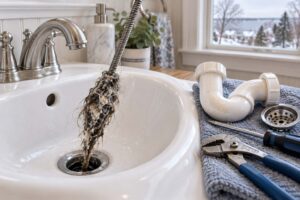
Drain snake (hand auger). A hand-operated drain snake—a flexible cable you feed into the pipe to break up or retrieve a clog—is a step up from plunging and can reach obstructions farther down the line. It’s a practical tool for homeowners to keep on hand for minor, recurring clogs, especially in bathroom drains. It’s not effective for grease buildup, mineral scale, or anything structural.
Chemical drain cleaners. These products work by generating heat or using caustic chemicals to dissolve organic clogs. They can open a drain temporarily, but they don’t remove the underlying buildup — they punch a hole through it. More importantly, caustic drain cleaners can damage older pipe materials like cast iron and certain plastics over time, and they can harm septic systems. We don’t recommend relying on them regularly, particularly in older Connecticut homes.
Professional snaking and hydro jetting. When home remedies aren’t working, or when the clog keeps coming back, professional equipment is a different category entirely. Our professional drain cleaning service uses both cable snaking and high-pressure hydro jetting—up to 4,000 PSI—to scour the pipe’s interior, removing grease, scale, and debris all the way through and flushing it out of the system.[4] For recurring or stubborn clogs, hydro jetting is the most effective, long-lasting solution available.
When a Clogged Drain Means Something More Serious
Most clogged drains are exactly what they seem: a localized blockage from everyday use. But some drain problems in Connecticut homes point to issues that go beyond a simple clog.
A drain that clears and then clogs again within weeks or months is usually trying to tell you something. If the same drain keeps backing up despite being cleaned, the cause is likely structural—a pipe belly, significant scale buildup on the pipe walls, or root intrusion—that snaking addresses temporarily but doesn’t fix. This is where our sewer line repair service comes in. A camera inspection shows exactly what’s happening inside the line without any excavation and gives us a clear picture of whether repair is needed and what kind.
Connecticut homeowners should also know they’re responsible for the sewer lateral—the pipe connecting the house to the municipal sewer—from the house to at least the property line, and in some municipalities all the way to the street connection. The Connecticut Department of Energy and Environmental Protection provides guidance on homeowner sewer lateral responsibilities that’s worth understanding before a problem develops.[5]
Simple Habits That Prevent Clogged Drains
Most clogged drains are preventable. A handful of consistent habits make a real difference:
- Install hair catchers on every shower and tub drain and clear them after each use or every few days.
- Never pour grease, cooking oil, or fat down the kitchen drain — collect it in a container and put it in the trash once it cools.
- Run hot water for thirty seconds after washing dishes to help move any residual grease through the line before it cools and sticks.
- Only flush toilet paper. No wipes, no paper towels, no hygiene products — regardless of what the label says.
- Use a basket strainer in the kitchen sink to catch food particles before they enter the drain.
- Pour a kettle of boiling water down the kitchen drain once a week to help soften grease buildup before it hardens.
- Have a plumber clean your drain lines professionally every one to two years if you live in an older home or have had recurring issues — our plumbing maintenance service includes drain cleaning as part of a full annual checkup.
FAQ: Clogged Drains in Connecticut
How do I know if my drain is just slow or actually clogged?
A slow drain has a restriction that’s building but hasn’t fully blocked the pipe yet — water still gets through, just not at the normal rate. A clogged drain is fully or nearly fully blocked, and water either doesn’t drain or backs up. Both warrant attention, but a slow drain is the better time to address it — before it becomes a complete blockage or backup.
Can I use baking soda and vinegar to clear a clogged drain?
The baking soda and vinegar combination is popular online, but it’s not particularly effective on real clogs. The reaction between the two creates a fizzing action that looks dramatic but doesn’t generate enough force or chemical activity to clear grease, hair, or debris from a pipe. It’s not harmful to try, but don’t rely on it to clear an actual clog. A plunger or hand snake is more effective, and if it doesn’t clear easily, our professional drain cleaning service will get to the root of it.
Why does my drain keep clogging even after I clear it?
Recurring clogs after clearing almost always mean one of two things: the root cause hasn’t changed (grease is still going down the drain, or a hair catcher isn’t being used), or there’s a structural issue — a pipe belly, significant buildup on the pipe walls, or root intrusion — that clearing the clog doesn’t address. If you’ve cleared the same drain more than once or twice in a short period, our sewer line repair team can run a camera inspection to show you exactly what’s happening and prevent you from spending money on repeated temporary fixes.
Is it safe to use chemical drain cleaners regularly?
We don’t recommend it, particularly in older Connecticut homes. Chemical drain cleaners are caustic and can corrode older cast iron and certain plastic pipes over repeated use. They also don’t fully remove the buildup — they create a temporary opening through it. If you have a septic system, most chemical drain cleaners can disrupt the bacterial balance in your tank. For recurring clogs, professional cleaning through our drain cleaning service is a more effective and less damaging long-term approach.
What’s causing the gurgling sound coming from my drain?
Gurgling from a drain is almost always air being pushed through a partial blockage somewhere in the line. It typically means there’s a restriction that hasn’t fully blocked the pipe yet but is making the system struggle to vent. It can also sometimes indicate an issue with the drain vent stack. Either way, a gurgling drain is a reliable early warning sign worth addressing before it becomes a full clog or backup.
When should I call a plumber for a clogged drain instead of trying to fix it myself?
Call a plumber if the plunger isn’t working after a few attempts, if more than one fixture is draining slowly or backing up, if water is backing up into unexpected places, if the drain keeps clogging after you clear it, or if you notice a persistent sewer smell. These are all signs that the problem is beyond what a plunger or hand snake can reliably address. Reach out to us , and we can usually get someone out quickly.
How much does it cost to fix a clogged drain in Connecticut?
For a straightforward localized clog cleared with a drain snake, most Connecticut homeowners can expect to pay $150 to $350, depending on the fixture and how accessible the clog is. More complex situations — a main line clog, hydro jetting, or a camera inspection — cost more but are priced based on what the job actually requires. Getting a proper diagnosis before the work starts ensures you’re paying to fix the actual problem, not just the symptom.
Sources
- U.S. Geological Survey — Hardness of Water: https://www.usgs.gov/special-topics/water-science-school/science/hardness-water
- Water Environment Federation — Fats, Oils, and Grease (FOG): https://www.wef.org
- American Society of Civil Engineers — Infrastructure Report Card, Wastewater: https://infrastructurereportcard.org/cat-item/wastewater-infrastructure/
- National Association of Sewer Service Companies (NASSCO): https://www.nassco.org
- Connecticut DEEP — Wastewater Management: https://portal.ct.gov/DEEP/Water/Inland-Water-Quantity/Wastewater-Management